What is vertical farming?
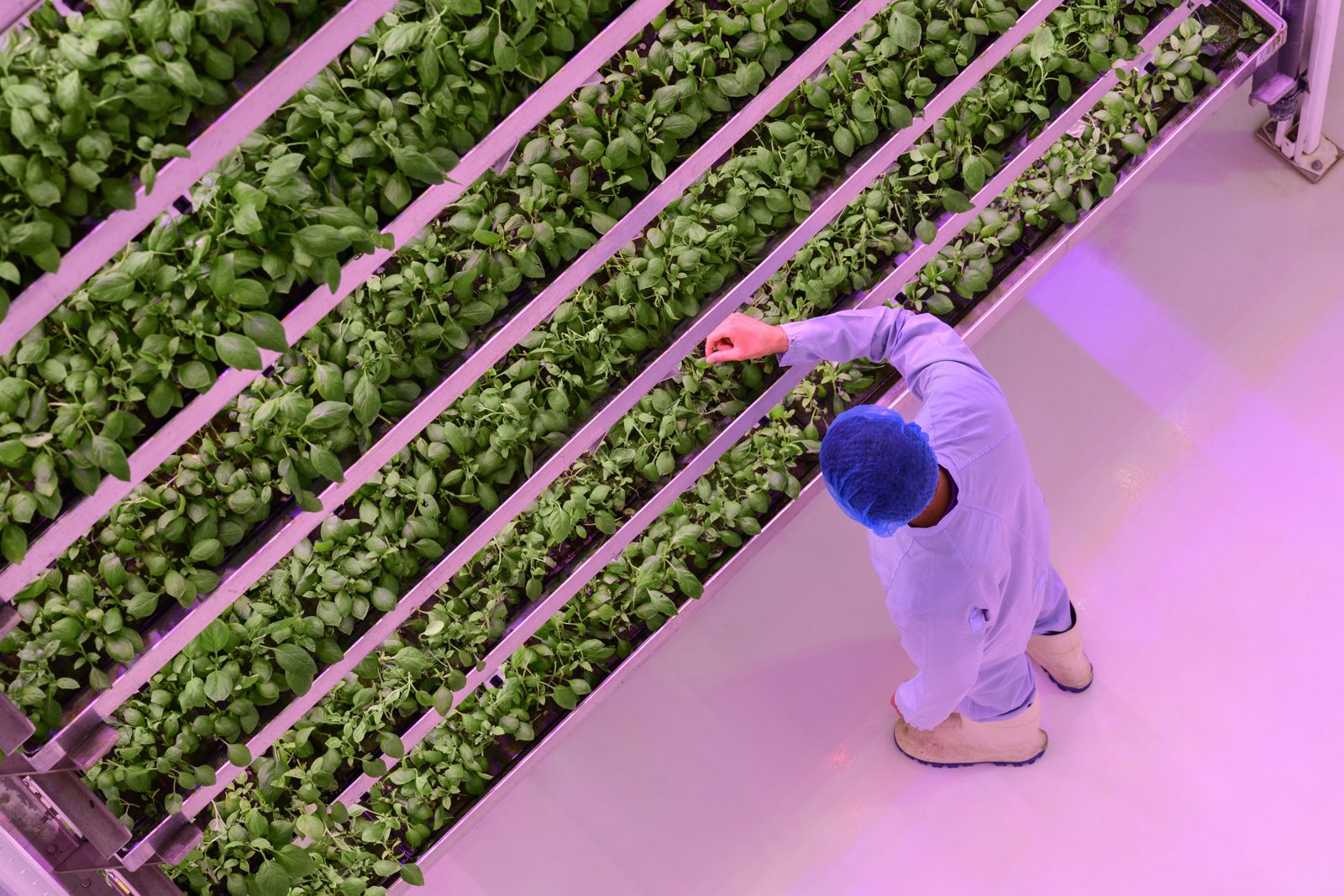
What does vertical farming mean?
Vertical farming refers to growing systems where crops grow in multiple layers stacked above one another, usually indoors, in a fully controlled climate. Instead of sunlight and seasons, the grower sets light, temperature, humidity, CO₂ and nutrients directly. At MetroFarms this happens autonomously: IoT sensors measure continuously, and machine learning adjusts before anything goes wrong. The result is predictable, year-round production independent of weather and outdoor soil.
What is a vertical farming structure?
A vertical farming structure is the physical build that makes stacked cultivation possible: multiple racks of growing layers stacked above one another, each with its own LED grow light, a closed-loop irrigation system that reuses water and nutrients, and sensors that manage climate and feed per layer. At MetroFarms that structure is fully integrated into a shipping container, so temperature, CO₂, humidity and light stay fully controlled, independent of the weather outside.
What are the benefits of a vertical farm?
More yield per m²
Stacked layers use height rather than area, so a 40ft container delivers a yield comparable to up to 7 acres of field farming.
Up to 95% less water
The closed-loop system reuses water and nutrients instead of losing them.
No pesticides
A sealed environment keeps pests out, for clean, residue-free produce.
Year-round, anywhere
No season, no weather-driven crop failure; grow next to the city where demand is, with short transport lines.
Predictable economics
Fixed footprint and cycle times make yield and payback period modellable (see our ROI calculator).
Which crop is best suited to vertical farming?
The economics work best for crops with a short cycle, high value per kilo and compact growth:
| Crop | Cycle | Trait |
|---|---|---|
| Leafy greens (lettuce, spinach, salad leaves) | ~28-35 days | Reliable base crop |
| Herbs (basil, coriander, mint) | ~21-28 days | High margin, strong foodservice & retail demand |
| Microgreens | ~7-14 days | Highest value per kilo, fastest turnover |
| Strawberries | ~60-90 days to first fruit | Premium niche crop |
Heavier crops such as potatoes or grains don't yet pay off — too much volume and energy per kilo. See Crops & Yields for the assumptions per crop.
What is vertical arable farming?
"Vertical arable farming" is often used interchangeably with "vertical farming", but arable farming strictly refers to large-scale cultivation of field crops such as grains, potatoes and sugar beet. Those crops are rarely suited to vertical systems because of their volume and low value per kilo. Vertical farming in practice therefore focuses on high-value leafy greens, herbs and microgreens — exactly what MetroFarms' systems are designed for.
Is vertical farming viable in the Netherlands?
Yes — the Netherlands is a world leader in high-tech and greenhouse horticulture (think Westland and the research base at Wageningen University & Research), and that combination of technical expertise, energy infrastructure and a temperate climate makes it well suited to container-based vertical farming. MetroFarms is actively targeting Dutch growers who want an autonomous, plug-and-play unit alongside existing greenhouse operations or urban demand. Run your ROI or book a demo to see what a unit would return on your site.
Vertical farming in the Netherlands
The Netherlands already has an active vertical farming sector: companies like Growy and Logiqs are building large-scale, automated vertical growing facilities, Fieldlab Vertical Farming tests new growing techniques together with the industry, and Wageningen University & Research (WUR) provides the scientific foundation the wider Dutch horticulture sector relies on. That's a strong starting point — but most of those initiatives are large-scale, capital-intensive facilities. MetroFarms fills the other end of the market: a turnkey, autonomous container that an individual entrepreneur or grower without their own R&D department can install and run straight away. For anyone in the Netherlands who wants to start with vertical farming without building a factory first, that's the entry route.
Considering starting with vertical farming?
Run your payback period with our ROI calculator, or book a demo to see a live unit.
Yield and water figures are indicative, pending our published spec sheet.